


Study sheds light on life at 9,500-year-old Wadi Rum settlement

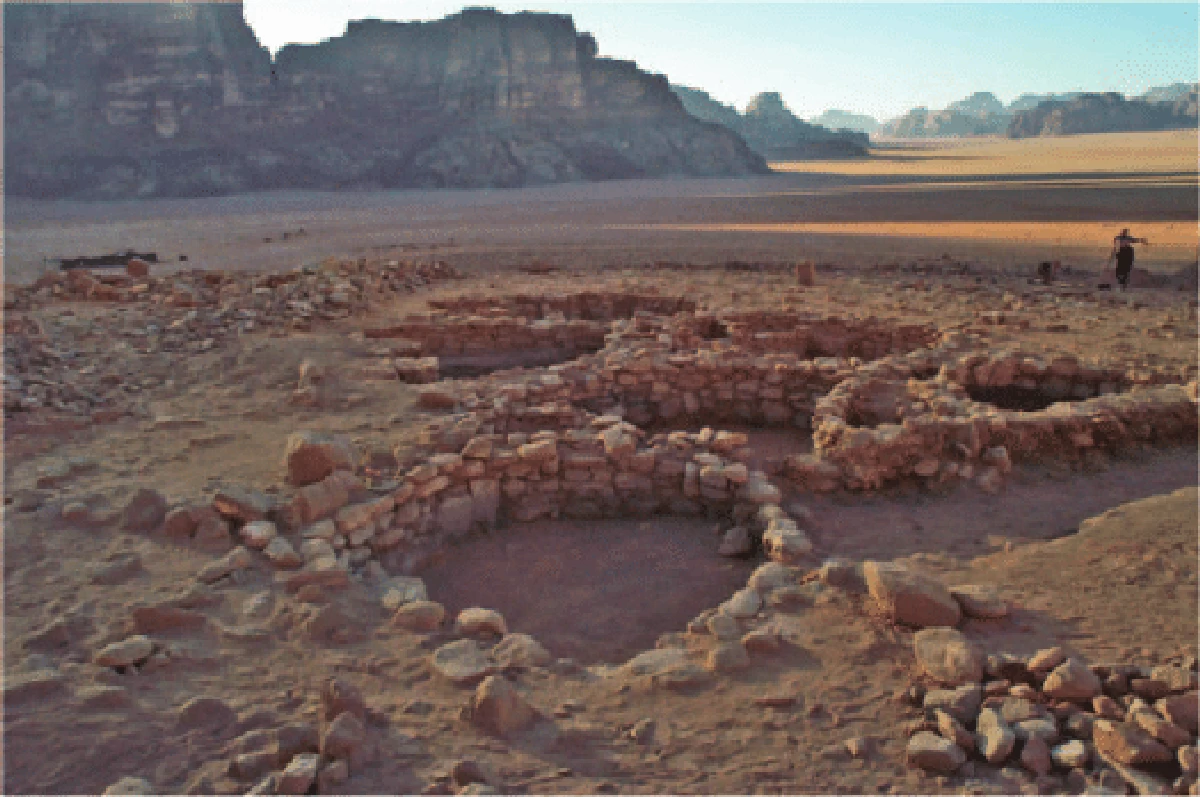
Image of the structures exposed by the excavation in Block I
(Photo courtesy of Donald Henry)
Image of the structures exposed by the excavation in Block I (Photo courtesy of Donald Henry)

AMMAN — Ayn Abu Nukhayla is located in Wadi Rum Desert and it became apparent that the site provided an unusual opportunity for addressing yet additional issues, those having to do with the social and demographic aspects of the people of Ayn Abu Nukhayla.

The discovery of stratified floors within many of the pit-house deposits prompted expansion of the research design to include an effort to trace the demographic, social and economic organisation of the site at household and community scales, noted Professor Emeritus from The University of Tulsa Donald Henry.

"Given the mobile lifestyle of the Abu Nukhaylans, our research also began to investigate the nature of their interactions at a wider, regional scale. Here we were interested in the nature of their contacts with neighbouring peoples and in the question of their traditional ties," Henry said.

Pit-house sites are especially amenable to defining socioeconomic patterns because of their clear spatial delineation of behaviours associated with commensal or household units, the basic social and economic elements of a prehistoric group.

"Moreover, the physical and geomorphic contexts of semi subterranean structures create sediment traps that are likely to preserve intact and stratified deposits.”

“This, in turn, provides an opportunity to not only examine synchronous spatial patterns of socioeconomic organisation within a site, but also to explore diachronic changes within these patterns in the context of both the individual household and the community,” Henry elaborated.

From a technical aspect, efforts to trace the socio-economic organisation of the site were based upon examining the spatial contexts of behavioural residuals (e.g., chipped stone artefacts, bones, ground stones, shells, phytoliths and so forth) stratigraphically, as well as across the house floors of the structures, the professor explained.

The study was based upon data recovered from proveniences restricted to quarter-metre squares and 10cm levels within each of the pit-houses.

While this procedure provided a detailed understanding of the distributions of the behavioural residuals left on the floors of Ayn Abu Nukhayla, it did not establish the degree to which these behavioural residuals actually reflected the locations of activities conducted on the floors.

Regarding this, archaeologists have come to a surprising conclusion. They have found that the artefacts and other evidence recovered from house floors rarely offer an accurate picture of the behaviours associated with the floors, Henry said.

“This is because of various formation processes that act to distort, remove, and replace de facto refuse assemblages.”

“Those assemblages connected to specific domestic activities undertaken on a floor may be compromised and altered to become secondary refuse assemblages composed of items derived from selective removal or discard,” Henry noted.

In studying the contextual relationships of the floor assemblages at Ayn Abu Nukhayla, however, archaeologists found abundant evidence that the general rule did not apply and that the items recovered on the house floors of Ayn Abu Nukhayla faithfully traced the locations of the activities that produced them some 9,500 years ago, the archaeologist underlined.

"The research at Ayn Abu Nukhayla provides a glimpse at a relatively brief slice of time within the culturally dynamic interval of the mid-late PPNB.”

“A short, moist pulse appears to have triggered a semi-permanent settlement at the site, but perhaps more than anything else, the experiences of the people who lived at Ayn Abu Nukhayla some 9,500 years ago, point to the importance of their having access to alternative economic practices in making opportunistic choices within a challenging and climatically fragile setting," Henry said.

.col-lg-12.second .opinion-widget{border-top:1px solid #D0D0D0;} #widget_1623 .opinions-title {font-size:32px;} #widget_1623 .opinions-title a{font-size:32px;} .first-author{ background-color:#ecedef; } .first-opinion-author-name{ background-color:white; width:max-content; padding:5px; }
.epaper-separator{ height: 1px; width: 100%; background-color: #D0D0D0; margin: 15px 0; }

Today’s Paper

.related-articles .article-widget-sm .article-title{font-size:16px;-webkit-line-clamp:3;} .related-articles .layout-ratio{padding-bottom:55%;}
.alert-success { color :#A3656F ; } .alert-danger { color : red ; } .footer { font-family:Myriad Pro,Arial; } .newspaper-footer{ visibility:hidden; } .socialFixOuter { position: fixed; top: 50%; margin-top: 40px; right: 0; transition: .2s; z-index: 20; height: 217px; width: 40px; } .socialFix { height: 30px; width: 30px; display: block; position: relative; cursor: pointer; background-size: 18px 18px; transition: .2s; background-position: center; background-repeat: no-repeat; border-radius: 2px; margin-top: 1px; } .socialFix:hover { width: 40px; margin-left: -10px; } .app-badge-img { height: 36px; width: auto; } @media (max-width: 768px) { .app-badge-img { height: 32px; } .app-badges { justify-content: center !important; } }
document.addEventListener("DOMContentLoaded", function () { const socialFix = document.querySelector(".socialFixOuter"); if (!socialFix) return; let firstInteraction = false; let hideTimeout = null; function checkMobileScreen() { if (window.innerWidth < 768) { socialFix.style.display = "none"; } else { socialFix.style.display = "block"; } } checkMobileScreen(); window.addEventListener("resize", checkMobileScreen); function handleFirstInteraction() { if (firstInteraction) return; if (window.innerWidth < 768) return; firstInteraction = true; socialFix.style.right = "-25px"; } socialFix.addEventListener("mouseenter", function () { if (window.innerWidth < 768) return; if (hideTimeout) clearTimeout(hideTimeout); socialFix.style.right = "0"; }); socialFix.addEventListener("mouseleave", function () { if (window.innerWidth < 768) return; if (hideTimeout) clearTimeout(hideTimeout); hideTimeout = setTimeout(() => { socialFix.style.right = "-25px"; }, 500); }); ["click", "touchstart"].forEach((evt) => { socialFix.addEventListener(evt, handleFirstInteraction); }); }); function validateEmail(email) { if (email.length > 255) return false; const emailRegex = /^[a-zA-Z0-9._%+-]+@[a-zA-Z0-9.-]+\.[a-zA-Z]{2,}$/; if (!emailRegex.test(email)) return false; if (email.includes('..') || email.startsWith('.') || email.endsWith('.')) return false; return true; } function sanitizeInput(input) { input = input.replace(/<[^>]*>/g, ''); input = input.replace(/javascript:/gi, ''); input = input.replace(/on\w+\s*=/gi, ''); input = input.replace(/[<>"'&(){}[\]]/g, ''); return input.trim(); } document.addEventListener('DOMContentLoaded', function () { function showModal(message, type) { const messageContainer = document.getElementById("messageContainerFooter"); messageContainer.textContent = message; messageContainer.className = `alert alert-${type} mt-3`; messageContainer.classList.remove("d-none"); setTimeout(() => { messageContainer.classList.add("d-none"); }, 5000); } document.getElementById("emailFormFooter").addEventListener("submit", function(event) { event.preventDefault(); const emailInput = document.getElementById("emailFooter"); const email = sanitizeInput(emailInput.value.trim()); if (!validateEmail(email)) { showModal('Invalid email format', 'danger'); return; } const formData = new FormData(); formData.append('email', email); fetch('/subscribeNewsletter', { method: "POST", body: formData, headers: { "Accept": "application/json", "X-Requested-With": "XMLHttpRequest" } }) .then(response => { if (!response.ok) { showModal("Error submitting email. Try again.", 'danger'); } return response.json(); }) .then(data => { showModal(data.message, 'success'); }) .catch(error => { showModal("Error submitting email. Try again.", 'danger'); }); }); });